


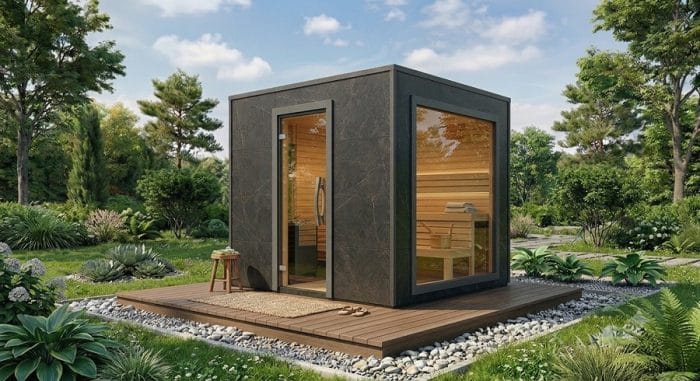
Garden Sauna Installation Process
Installing an outdoor heat therapy unit requires careful planning around electrical capacity, ventilation, and structural foundation. Understanding the technical requirements of electric versus wood-burning stoves ensures a smooth setup and long-term operating safety.
Electric models demand dedicated electrical wiring and high-voltage connections installed by a certified electrician. While the upfront installation requires technical electrical work, daily operation is completely effortless. Wood-burning units require strict chimney clearance, heat-resistant floor plates, and safe proximity to surrounding structures to satisfy local fire safety codes.
Regardless of your chosen stove type, structural thermal efficiency is paramount for outdoor units. Building a fully weather-resistant outdoor wellness cabin requires high-density insulation, double-glazed glass panels, and heavy-duty timber siding. Proper moisture barriers prevent heat loss and protect the structure against seasonal moisture buildup.
Selecting the wrong stove for your space can lead to high energy bills or impractical setup challenges. To compare atmospheric qualities, heat types, and maintenance requirements, check out our companion article on electric vs wood burning garden sauna features to discover which heater matches your routine.
Ventilation is another crucial factor often overlooked during setup. Proper airflow intake and exhaust vents ensure fresh oxygen circulation while preventing heat stagnation inside the room.
By carefully evaluating installation requirements, local building codes, and insulation standards, you build a high-performing heat retreat. A properly engineered setup provides a seamless blend of comfort, safety, and energy efficiency for years to come.
Garden Sauna Installation Process